

Senior Dog Can’t Jump on the Couch Anymore? Ramp or Stairs
If your senior dog can’t jump on the couch anymore, a ramp or stairs can give them their favorite spot back without the strain. In short: ramps are usually the safer choice for dogs with arthritis, back problems or bigger bodies, while stairs work well for small dogs whose joints are stiff but still fairly steady. Before you buy either one, it’s worth a quick vet visit to find out why the jumping stopped.
Disclosure: Product recommendations in this article are based on third-party reviews and customer feedback, not my own hands-on testing. As an Amazon Associate I earn from qualifying purchases.
Why your senior dog can’t jump on the couch anymore
Jumping onto furniture asks a lot of a dog’s body. The back legs push off hard, the spine flexes, and the front legs absorb the landing on the way down. As dogs age, that move gets harder, and many simply stop trying.
Common reasons include:
- Arthritis and joint pain. Stiff hips, knees and elbows make the push-off and landing uncomfortable.
- Back problems. The American Kennel Club notes that long-backed breeds such as Dachshunds, Corgis and Basset Hounds are prone to intervertebral disc disease (IVDD), and repeated jumping puts stress on the spine.
- Muscle loss. Older dogs often lose strength in their hind legs, which is exactly where the jump comes from.
- Vision changes. A dog who can’t judge the distance well may hesitate before leaping.
- A bad experience. One slip or painful landing can make a dog wary of trying again.
Dogs are good at hiding discomfort. Both the AKC and PetMD point out that pain often shows up as small changes rather than obvious limping: pausing before a jump, lining up carefully first, taking stairs sideways, or giving up halfway.
When to see your vet first
If your dog went from jumping easily to refusing overnight, or you notice yelping, trembling, a hunched back, wobbly back legs, or dragging paws, call your vet before buying anything. Sudden changes can point to an injury or a disc problem that needs prompt treatment. For slow, gradual changes, a regular checkup is still a good idea, since pain relief, joint support and weight management can make a real difference alongside a ramp or stairs.
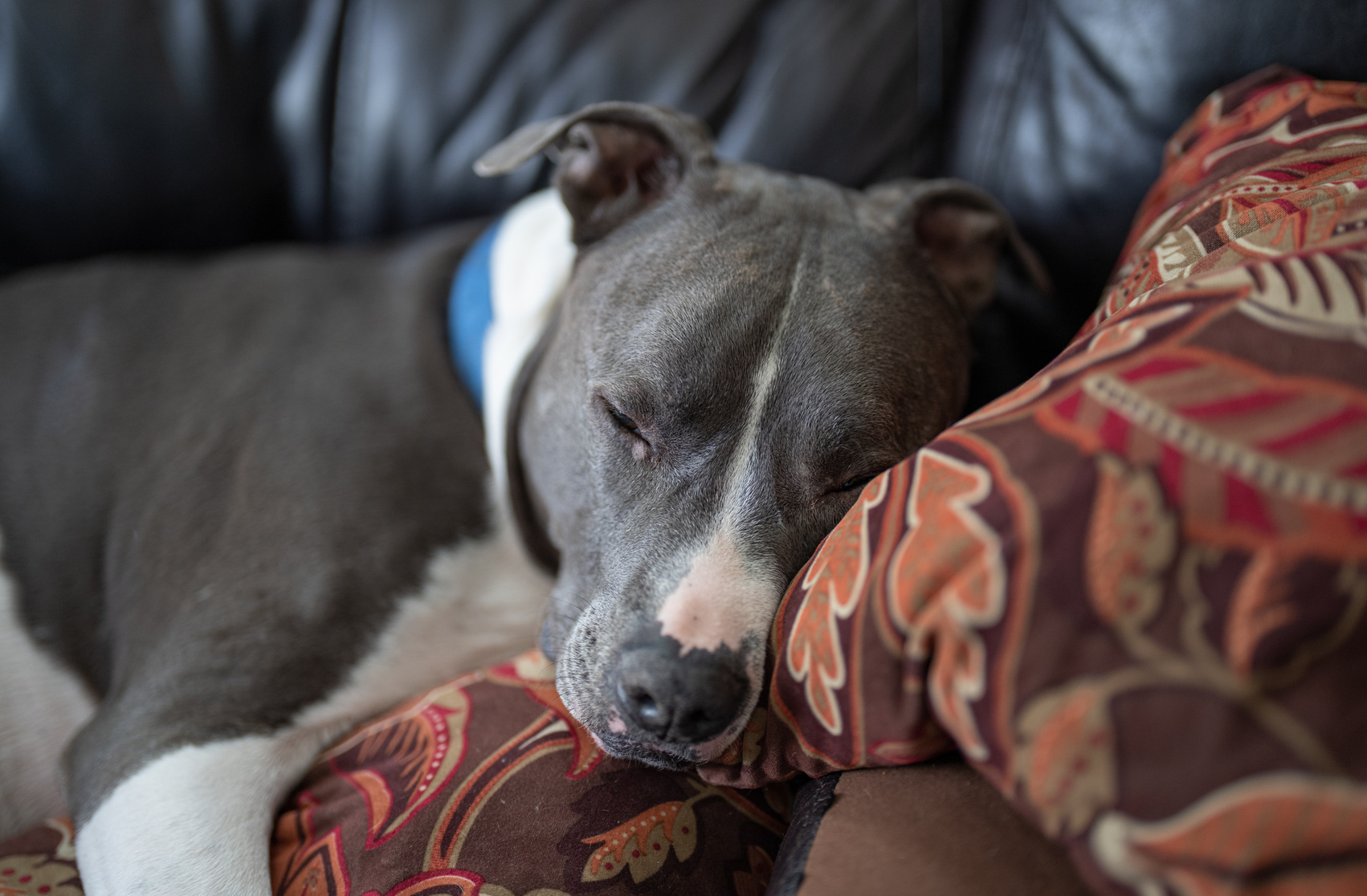
Ramp or stairs: which is better for a senior dog?
There’s no single right answer, but the decision usually comes down to your dog’s size, health and the height of your couch.
Choose a ramp if your dog:
- Has arthritis in the hips or knees, or a diagnosed back condition like IVDD. PetMD recommends ramps over stairs for dogs with arthritis or back issues, because a smooth slope avoids the repeated lifting motion of each step.
- Is a medium or large dog. Bigger dogs can find small pet steps cramped and wobbly.
- Is a long-backed breed, where every bit of spinal flexing counts.
- Is nervous or unsteady. The AKC notes that ramps can be a better fit for fearful dogs and sore joints.
- Needs to reach a tall surface, like a high bed.
Choose stairs if your dog:
- Is small (roughly under 40 pounds) and still moves fairly well, just with some stiffness.
- Needs to reach a standard-height couch rather than a tall bed.
- Lives in a smaller home. Stairs take up much less floor space than a ramp, which needs length to keep its slope gentle.
A good middle ground for some dogs is a ramp now, even if stairs would work today. Dogs with progressive joint disease tend to lose strength over time, and a ramp they already know is easier than retraining later.
What to look for in a dog ramp or stairs for the couch
Whichever you choose, a few features separate a helpful tool from one that sits unused in the corner.
For ramps
- A gentle slope. The steeper the ramp, the less useful it is for a dog with weak back legs. Longer ramps make for gentler angles, and Dogster suggests at least three feet of length for bed-height ramps.
- Grip. Carpet, rubber or ridged surfaces help paws stay put. Slippery ramps are the most common complaint reviewers raise.
- Width. Your dog should fit comfortably with room to spare. Large dogs generally need about 18 inches or more.
- Stability. The ramp shouldn’t shift or flex when your dog steps on it. A top landing helps dogs step off onto the couch smoothly.
- Side edges or rails for dogs who wobble.
For stairs
- Low risers. Shorter steps are easier on stiff joints. Many senior-dog guides suggest risers in the 4 to 6 inch range.
- Deep treads. Your dog should be able to stand with all four paws on a step. Deeper steps also help if your dog tends to slide.
- The right height. The top step should sit level with, or just below, the couch cushion so your dog doesn’t have to hop at the end.
- A non-slip bottom so the stairs don’t skid across hard floors.
- A comfortable weight rating. Pick a set rated well above your dog’s weight.
Top picks: ramps and stairs for senior dogs
These products show up repeatedly in independent reviews and roundups for helping older dogs onto beds and couches. Opinions below are from those reviewers and customer feedback.
PetSafe CozyUp Wooden Dog Ramp
Best for: Medium and large senior dogs, dogs with arthritis or back problems, and taller couches or beds.
What reviewers like: This ramp was named a top overall pick by Dogster and a best-for-beds pick by Rover. Reviewers like its sturdy wood frame, the carpeted surface with ribs for footing, the landing at the top, and that it reaches most bed and couch heights. It’s rated for fairly heavy dogs and looks more like furniture than many plastic options.
Common complaints: It’s long and doesn’t fold, so it needs a dedicated spot. Some reviewers found the carpet a bit slick for certain dogs, and it may be more ramp than you need for a low sofa.
Pet Gear Easy Step II Pet Stairs
Best for: Small to medium dogs who can still manage steps and need a lift onto a standard-height couch.
What reviewers like: Rover picked it as a top choice for stairs, and senior-dog roundups also recommend it for smaller dogs. Reviewers point to the sturdy molded plastic build, the soft removable tread covers, and a generous weight rating for its size. It’s lightweight enough to move from room to room.
Common complaints: With only two steps, it’s too short for most beds and some taller sofas. A few owners mention that the treads could be deeper for larger paws.
Best Pet Supplies Foam Pet Steps
Best for: Small and toy-breed seniors, and owners who want something soft and light.
What reviewers like: Rover recommends these foam steps for furniture and high beds. They come in three, four and five-step heights, weigh only a few pounds, and have a removable, washable cover. Reviewers like that the soft foam is gentle on joints and that the steps blend in with home decor.
Common complaints: Foam can compress over time, and the steps can slide on hard floors without a rug underneath. They aren’t meant for bigger or heavier dogs.
How to teach your senior dog to use a ramp or stairs
Most dogs don’t walk up a new ramp on day one, and that’s normal. The AKC recommends short, upbeat sessions with no pushing or punishment. Here’s a simple plan:
- Let your dog explore. Set the ramp or stairs on the floor (or a ramp nearly flat) and let your dog sniff it. Reward any curiosity.
- Make it steady. Make sure nothing wobbles. A single slip early on can set training back days.
- Lure with treats. Place treats along the surface so your dog takes one step, then two, then more.
- Add a guide. Putting a wall or barrier along one side helps keep your dog from stepping off the edge.
- Practice going down, too. Coming down is often harder for dogs with weak front ends or sore shoulders. Go slowly and reward calm steps.
- Block the old route. Once your dog gets the idea, gently discourage jumping so the ramp or stairs becomes the habit.
Many dogs catch on within a week. If yours keeps refusing, they may need a gentler slope, deeper steps or more grip, and PetMD notes it sometimes takes trying more than one product.
Other ways to help a senior dog who can’t jump
- Add rugs or runners on slippery floors near the couch, so the approach is as secure as the ramp.
- Offer a low, supportive dog bed next to the couch as a comfortable alternative.
- Keep your dog at a healthy weight. Extra pounds put more load on aging joints.
- Keep up gentle exercise like short, regular walks to maintain muscle.
- Ask your vet about pain management and joint support options if stiffness is getting worse.
FAQ
Why can’t my old dog jump on the couch anymore?
The most common reasons are arthritis, back problems, weaker hind legs and changes in vision. Your dog may also be avoiding a move that once hurt. If the change came on suddenly or your dog seems to be in pain, see your vet promptly.
Are dog ramps or stairs better for arthritis?
Ramps are generally the better choice for arthritic dogs because they remove the repeated stepping and lifting motion. Small dogs with mild stiffness often do fine with low, deep stairs. Your vet can help you decide based on which joints are affected.
Is jumping off the couch bad for senior dogs?
Jumping down puts a lot of force on the front legs, shoulders and spine, which can be hard on aging joints. It’s a particular concern for long-backed breeds prone to disc problems. A ramp or stairs gives your dog a gentler way down as well as up.
How long does it take a dog to learn to use a ramp?
Many dogs get comfortable within several days to a week of short, treat-based sessions. Nervous dogs may take longer. Keep practice positive and never force your dog onto the ramp.
How tall should dog stairs be for a couch?
Measure from the floor to the top of your couch cushion and choose stairs that reach that height or sit just below it. That way, your dog can step straight across instead of hopping up at the end.
This article is for general information and isn’t a substitute for advice from your veterinarian.